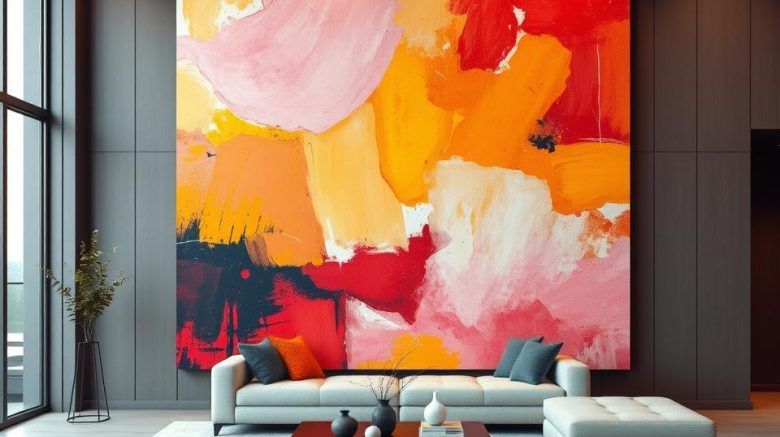
Lively Colorful Nonfigurative Art for Modern Spaces
My earliest encounter with a vivid canvas reshaped my sense of space. A plain lounge shifted in an instant after adding vibrant extra large wall art. In moments, the room felt energized, lighter, and more focused. This experience taught me the unmatched power of color in influencing mood and initial impressions.
Up to 90% of first impressions are influenced by color, and colorful abstract art leverages this. Narrative-free, modern abstract art can boost a dining space or soothe a bedroom. The key lies in hue, shape, and visual strength. I guide clients to add character to neutrals while keeping designs clean and modern.
Big canvas pieces act as visual anchors, adding structure and focus. By choosing the right size, frame, and employing a strategic approach, these vibrant artworks enhance, rather than overpower, modern settings. For those aiming for a bold statement, I often suggest exploring Extra Large Wall Art options.
Key Takeaways
- Color drives first impressions and mood—select art with purpose.
- Colorful abstract art offers emotional impact without literal imagery.
- Use modern abstracts sparingly for strongest results in minimal rooms.
- Oversized pieces ground spaces—watch proportions and frames.
- Color-rich contemporary pieces refresh spaces with intention.
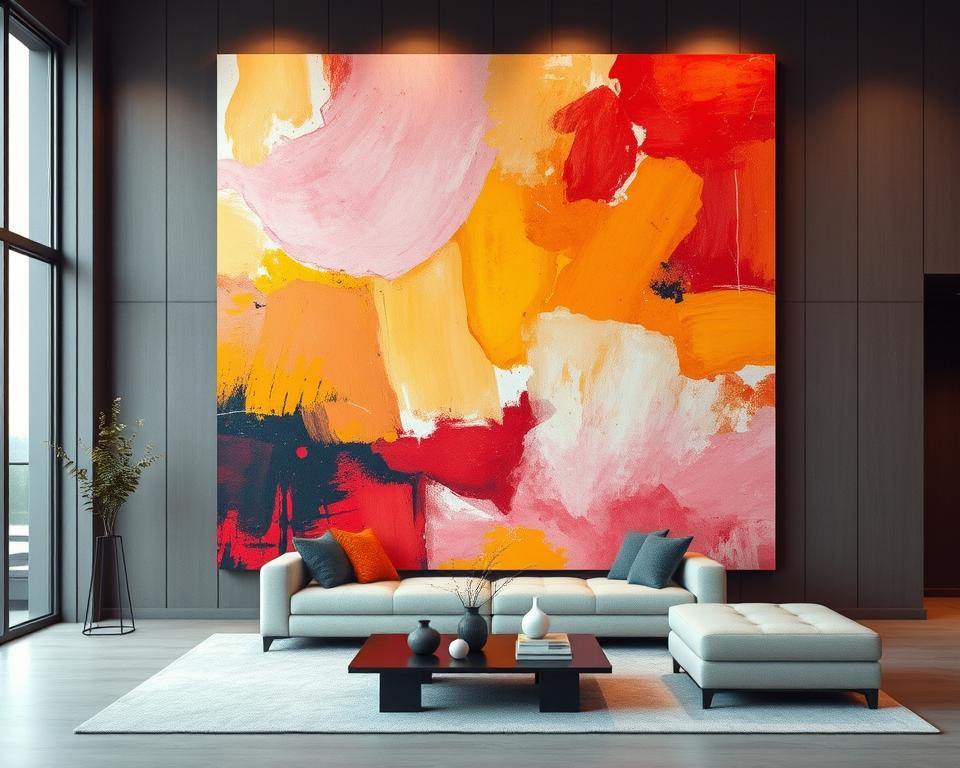
Why color matters in interior design and modern spaces
Color influences immediate first reactions. Color sets mood early—often before furniture or lighting are noticed. I use color psychology to align palettes with room function.
How color drives first impressions and mood
Warm hues—red, orange—add energy. Cool tones—blue, green—promote calm. A bold wall or modern abstract can create a welcoming, vibrant feel. For private zones, softer hues support rest and focus.
Research-backed effects of color on perception and emotion
The Times reports that viewing abstract art engages diverse brain areas, fostering creativity. So, vivid abstracts are valuable in ideation spaces like home offices. Meanwhile, black-and-white works add sophistication and contrast without overpowering.
Using Color Deliberately to Set a Mood
I tailor saturation, warmth, and contrast to the space’s purpose. High-saturation colors energize, while muted tones soothe. Echoing artwork hues in accessories creates cohesion. I demonstrate how XL pieces from Extra Large Wall Art can shift a room’s feel.
My Practical Steps:
- Identify the emotional aim: whether to energize, soothe, or inspire.
- Pick a main color and one or two accents.
- Let a vibrant abstract serve as the focal anchor.
- Use monochrome accents to refine contrast.
Colorful Abstract Art as a Design Tool
Vivid abstracts act as a dynamic voice in interiors. It speaks in color, form, and gesture rather than literal scenes. Modern abstracts balance intimacy with universality. That openness lets each viewer read it differently.
Abstracts often carry a wider emotional bandwidth than literal scenes. While literal art captures specific scenes, abstract art’s essence changes with the environment. Such flexibility fits shared spaces—living rooms, foyers—well.
Without actual imagery, form, shape, and saturation speak volumes. Strong geometry grabs attention; gentle forms calm. Vibrant colors energize, and muted tones offer calm. These cues engage the brain, fostering creativity and new perspectives.
To infuse personality and depth in modern spaces, mix vivid abstract art with sleek designs. Set against neutrals, the piece pops without visual clutter. Harmonizing abstract prints with understated fabrics makes the space appear well-thought-out and connected.
- I recommend a standout modern abstract painting for each main seating area.
- Aim for a balance between scale and space for clear visibility.
- Choose vivid art that coordinates with your scheme.
Picking Palettes: Warm, Cool & Jewel Tones
I advise on choosing a palette that matches purpose and personality. Warm/cool/jewel tones set mood, influence traffic, and affect how large abstracts read.
I recommend warm hues—reds, oranges, and yellows—for dining and social spaces. They ignite conversation and improve vibrancy. To prevent visual overload, use one dominant warm color and subtly include it in cushions or rugs.
Cool tones, such as blues and greens, bring calmness. Perfect for bedrooms and retreats. Pairing a cool-toned painting with soft linens and matte finishes creates a peaceful, clutter-free environment.
Emeralds and sapphires project confident modernity. These deep, rich hues suggest luxury, particularly when highlighted in a single central piece of black and white painting. They shine above mantels, beds, or dining consoles.
- Test swatches and review mockups first.
- Lead with one color, reinforce via accents.
- Let neutrals host intense color to spotlight large art.
Ordering samples from Extra Large Wall Art or checking fabric swatches helps gauge color behavior in your lighting. Small trials ensure the chosen colorful abstract art piece matches room expectations.
Scale & Placement: Making Large Abstracts Work
I focus on how scale shapes a room. XL pieces change both atmosphere and proportion. Always measure to keep proportions on point.
Over furniture, I use the two-thirds guideline. The aim is to select artwork that measures approximately two-thirds the width of the piece of furniture it’s over. This ensures a visual balance. Art that’s too small may appear disconnected, while pieces that are too large might overwhelm the space.
Why size matters: the two-thirds rule and visual balance
Measure furniture width, then target two-thirds for art. It fits large art neatly while avoiding crowding. It also improves visual flow across the room.
Where oversized canvases have the biggest impact
I find that oversized colorful abstract wall decor is most effective in living and dining areas. They comfortably host bold statements. An expansive abstract piece not only anchors a seating arrangement but also clearly defines a dining area in an open plan setting. Houzz supports this approach, noting homeowners often use bold art pieces to inject personality into their spaces—an outcome I witness regularly.
Breathing room, eye-level placement, and avoiding visual noise
Provide breathing room around artworks. Hang the center ~57–60 inches from the floor for comfortable viewing. Spacing prevents visual clutter.
- Measure carefully: match XL pieces to sofas/tables/walls.
- Keep scale balanced: too big will dominate, too small will disappear.
- Let large art define functional areas.
- Maintain air: space pieces to reduce clutter.
When unsure about sizing, I recommend checking the sizing guide provided by Extra Large Wall Art. These colorful Painting charts are invaluable in aligning canvas sizes with typical furniture dimensions, streamlining the selection process and minimizing the risk of needing to return items. Gallery walls benefit from size variety with cohesive sequencing. This yields unity over clutter.
Choosing Framed or Unframed Finishes
Finish choice hinges on room and mood. A framed piece adds a formal touch, ideal for living rooms and entryways. Unframed gallery wraps feel lighter. Ideal in relaxed spaces like kitchens and family rooms.
For polish, I favor framed colorful abstracts. Slim black or metallic frames enhance color. Contrast improves, and plexi/museum glass protects. These materials protect the art, maintaining the vibrancy of colors over time.
For a minimalist touch, I prefer gallery-wrapped canvases. The artwork extends around the stretcher bars, presenting it as a cohesive element. It’s ideal when art should complement rather than dominate.
I match frames to room finishes. Metallic frames coordinate with stainless and chrome. Wood frames warm up Scandi or boho schemes. A skinny ebony frame is ideal for black and white pieces, adding balance without diminishing warmth.
When arranging multi-panel sets, I balance mixed finishes thoughtfully. I maintain continuity with gallery-wrapped canvases. Sometimes I add a framed piece for emphasis. Aim for statement first, finish as style amplifier.
Materials and Texture in Vivid Contemporary Art
I guide readers through material choices that shape how a piece reads in a room. Opting for acrylic, oil, or mixed-media influences color vibrancy, texture, and the interplay of light. My focus lies on practical aspects, ensuring art complements its environment effectively.
With artists and framers, I tailor finish picks to context. Acrylic wall art, with its crisp edges and vivid colors, suits luminous living spaces well. Oil gives depth for intimate rooms; mixed media adds texture for impact.
Texture and sheen strongly affect ambiance, especially in minimal rooms. A glossy acrylic piece can animate a space with reflected light, contrasting with dull surfaces. On the other hand, oil’s heavy impasto offers depth and luxury through texture and shadow. Even minor textural elements ensure abstract prints stand out in streamlined designs.
Durable display methods that maintain color fidelity over time are outlined.
- Canvas + UV inks for lasting vibrancy.
- Fine art paper framed behind glazing to manage humidity.
- Face-mounted acrylic boosts saturation and eases cleaning.
When selecting materials, consider the finish, exposure to sunlight, and ambient moisture levels. Sunny/high-traffic zones benefit from glazing or plexi. In intimate spaces, textured oil or mixed media invites closer viewing.
My perspective on presentation emphasizes matching the work’s finish to the room’s scale and balancing sheen against other surfaces. Acrylic complements streamlined decor for a contemporary, dynamic effect. Conversely, pairing framed abstract prints with plush textiles integrates hues throughout the space, creating harmony.
Minimalist Interiors with Vivid Abstract Art
I advocate for a subtle method in introducing colorful abstract art into a sleek, modern setting. The optimal choice for minimalist living spaces is wall art that stands alone, allowing it to make a statement without overwhelming the space. One focal piece enriches the room without crowding.
Select a signature work from Extra Large Wall Art or a trusted source. Mount it on a neutral field above simple furniture for impact. This placement reads intentional—not overpowering.
Subtly echo elements from the piece in decor. Pick a few art shades for cushions or a rug to build cohesion. This method ensures the space feels harmonious and well considered.
Pare back items that compete with the piece. Minimalism supports tranquility. Give the piece air so its color and form lead without distraction.
- Create focus with one color pop.
- Repeat limited hues in textiles for cohesion.
- Allow breathing room so the piece reads as intentional.
Use matte/soft-gloss to limit reflections. Simple stretches and subtle frames fit best. These keep color and gesture central.
For nuance, pair small prints with a plant or sculpture on shelving. This balance between unoccupied space and selective, meaningful decorations emphasizes the minimalist ethos while highlighting distinctive, colorful art.
Styling Multi-Piece Sets & Galleries
I share practical guidance to stage multi-piece art for calm, intentional rooms. Multi-panel works bring color and motion to walls. In living areas, hallways, and open-plan spaces, I employ coordinated sets to direct the view.
Diptychs and triptychs add cadence with restraint. They guide the eye with measured rhythm. Pairs in tighter spaces balance proportion and color.
Using spacing and alignment rules maintains balance. Aim for ~two-thirds total width over furniture. Spacing pieces 2 to 4 inches apart generally fits most home styles well.
In open plans, sets help mark zones. A cohesive set behind the sofa defines seating. Staggered pieces in dining areas create soft division, suggesting design intent rather than overt separation.
Mix finishes so variety feels textural, not chaotic. Gallery wraps and frames pair well if they share color/theme. Repeating cues unifies the gallery.
Scale sensitivity is essential when mixing. Anchor with the largest at eye level and flank with smaller. For expansive walls, evenly spaced large abstract pieces maintain flow and unity.
In curating a home gallery, maintaining a unified color scheme is key. It transforms varied collections into a cohesive abstract art display. Selective color repetition facilitates the harmonious coexistence of different textures and frames.
- Use 2–4 inch gaps for close groupings.
- Align centers at eye level for living areas.
- Use a shared color/motif across finishes.
- Scale combined width to two-thirds of underlying furniture.
Practical buying guide from Extra Large Wall Art
I guide you through selections that safeguard hues and simplify mounting. These recommendations come via Extra Large Wall Art. They offer an array of made-to-order pieces. Pick stretched canvas, framed canvas, or framed fine art paper. They ship across North America.
Check samples and mockups carefully pre-purchase. The lighting in your space can alter the appearance of colorful abstracts. View proofs in daylight and artificial light.
Materials/Formats & Shipping I Suggest
Acrylic delivers glossy punch and distance readability. Canvas offers a textured appeal, bringing a soft touch to vibrant colors. Framed fine art prints are ideal for formal settings, where sharp edges are key.
Made-to-order pieces usually arrive ready to hang. Verify if your carrier can handle large parcels and inspect packaging methods to prevent damage during transport. Proper frames and plexiglass preserve intensity and resist dust.
How to Size Over Sofas, Beds, and Tables
Use two-thirds width for proportional harmony. This keeps sofa zones balanced and clear.
For beds, ensure the art is centered above the headboard with ample side space. Dining area pieces should mirror the table’s dimensions for a cohesive look. Use the “Ultimate Wall Art Size Guide” for precise picks.
Framing & Protective Finishes to Keep Color Vivid
A gallery wrap offers frameless sleekness. Slim black/metal frames add sophistication in living rooms or offices. Plexiglass covers guard against fading and dust.
- Apply UV finishes on sunny walls.
- Request archival ink options for durability.
- Consider professional hanging hardware for extra-large wall art to ensure safety.
Blend aesthetics and practicality in planning. Right material/size/protection keeps big art impactful over time.
Colorful abstract art
What began as a niche is now a staple in modern homes. Bold color and loose form uplift emotion and alter ambiance. Small hue tweaks sway mood and response.
Why this style is trending in modern interiors
Owners favor colorful abstract expressionism to express personally beyond literal scenes. Houzz indicates vivid art is increasingly sought to revive rooms. One big work can set mood, anchor focus, and cut accessory clutter.
Room Examples
- Above the sofa, an XL canvas anchors and complements neutrals.
- A colorful abstract piece in warm tones instantly adds conversational value to a dining area.
- Blue-green abstracts with gentle intensity promote bedroom tranquility.
Creativity Gains from Abstract Viewing
Evidence suggests abstracts activate wider neural networks. Adding vibrant works to offices/studios fosters innovation and new connections.
Experience pieces in person at Extra Large Wall Art. Observing art within an actual setting allows for a better assessment of its scale, finish, and how it interacts with color in a room.
Balancing Color with Black, White & Neutrals
Contrast guides the eye. Black and white abstract art invokes timeless calm. It allows a colorful anchor to claim attention without causing chaos.
Flank a vivid anchor with compact monochrome works. Hang the color anchor at eye level. Group B/W works around it for cohesion.
Neutrals—soft gray, warm beige—let color breathe. Such a backdrop makes a modern abstract painting pop. It clarifies visual hierarchy.
Small accents like throw pillows, lamps, or frames in black, white, or muted tones link art and decor. Echoing shapes/hues keeps bold pieces intentional, not overwhelming.
- Use a color anchor with two B/W flanks to create rhythm.
- Place neutral wall art behind a sofa to heighten contrast and depth.
- Thin black frames structure the view while preserving warmth.
When testing combinations, I favor samples from galleries like Extra Large Wall Art to observe scale and tone firsthand. Viewing pairings on-site aids in selecting the perfect modern abstract painting and matching accents for a space.
Conclusion
Color-forward abstracts transcend simple decoration. It puts emotion on canvas, shaping ambiance. Whether it aims to invigorate a dining area, instill tranquility in a bedroom, or complement a living room, the choice of color, size, and texture is crucial. Large pieces can define a room, while matching sets and distinctive vibrant art inject character and flow.
Vibrant contemporary art can improve a modern space without overwhelming it. Medium and frame affect how colors read. By echoing hues in soft furnishings and accents, a cohesive look is achieved. Neutral backgrounds should be used to ensure the art’s colors pop effectively.
Rising demand and research underscore bold, custom pieces. Extra Large Wall Art offers enduringly vivid formats/sizes. I urge you to play with different color schemes and sizes. Visit Extra Large Wall Art to discover the pieces that will perfectly transform your space.