
Ever pondered if a mere sink hole cover or countertop plug could avoid the expensive replacement of damaged granite? Tiny modifications can significantly improve the kitchen space. Relocating a gas range, taking out an old faucet, or incorporating a built-in mixer leaves noticeable marks. Using a cover, grommet, or plug on the kitchen counter can hide these unsightly scars. They keep crumbs out and the area working well, preventing a complete countertop overhaul.
Best Prices On Sink Extra Hole
When considering aesthetics, homeowners usually opt for sink hole covers made of solid metal or plastic. They prefer grommet-style plugs for cord management and cutting-board style tops for heavy usage. Some homeowners go for removable panels or epoxy fillers for a lasting fix. Hardware stores stock these parts and covers easily. If you have specific needs such as grommets and flanges, visit Installation Parts Supply.com.
Options For Covering Unused Kitchen Counter Holes
Unfilled sink or appliance cutouts can give a kitchen an incomplete appearance. A few practical choices can conceal this gap. They safeguard the countertop and increase utility without the need for a full surface replacement. Choose an option that fits your design and material tastes.
Solid Covers For Cosmetic Sink Hole Repairs
Extra faucet or accessory holes can be covered by solid metal or plastic pieces. You can find metal covers from brands like Jones Stephens and Brizo. These harmonize with standard faucet finishes for a unified appearance. They are affordable, simple to fix, and effective when disposals or other elements are missing.
Custom Inserts And Decorative Plates
Decorative plates and custom inserts work well for bigger gaps. Choices involve stainless steel plates, brushed nickel covers, and trim rings that match current hardware. Matching the brand of the faucet can help get a consistent look. This ensures a cohesive countertop look.
Cover-top And Cutting Board Options
Cutting board cover-tops can transform an unused sink opening into a functional workspace. You can have these boards fit flush or slightly recessed into surfaces like granite. A few enhance their configuration with under-board LED lighting for style and better visibility.
If regular sizes don’t work, local carpenters or countertop makers can build custom cutting board cover-tops. They adjust these to match the edge details of your cabinetry. This maintains the aesthetic of your surface while creating a versatile workspace.
| Selection | Best For | Common Materials | Benefits | Drawbacks |
|---|---|---|---|---|
| Solid faucet hole cover | Individual faucet holes, tiny openings | Stainless, plastic, chrome finish | Cheap, easy install, clean look | Only for small holes, not very functional |
| Decorative cover / insert | Medium to large cutouts, trim matching | Brushed nickel, stainless, decorative metal | Coordinates finish, tough, blends in | Could need bespoke sizing for weird shapes |
| Cutting board insert | Large sink or machine cutouts | Maple wood, walnut, bamboo, composites | Functional surface, design opportunity, custom fit | Needs care, potentially higher price |
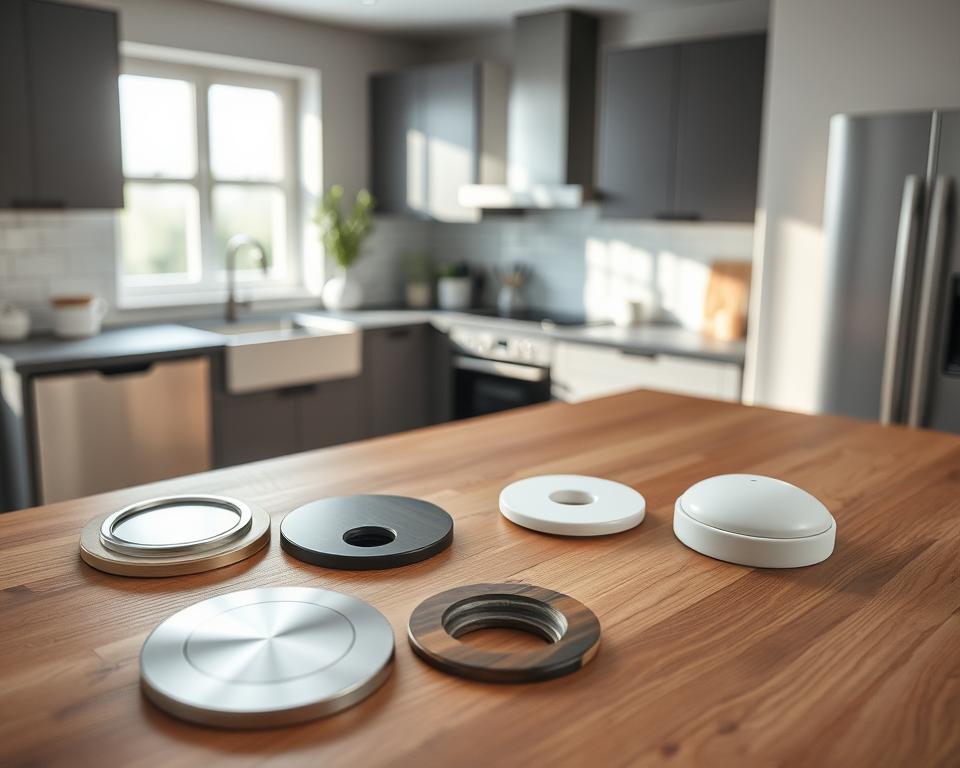
Countertop Hole Plugs And Sink Cover Selections
Selecting the appropriate countertop hole plug or sink cutout cover is essential for a tidy and functional kitchen. This article will aid you in comparing grommet and solid plug selections. Also, it helps you pick materials that go well with granite or quartz countertops. It is also crucial to size these components accurately for a seamless fit.
Grommet-style Options For Cable Pass-throughs
Grommet-style units exist in plastic, metal, and rubber. They serve as cable management solutions for kitchen appliances and devices. These include blenders, mixers, and phone chargers. Furthermore, many come with removable caps or brush inserts, effectively concealing cables when not in use.
To manage multiple cables, pick a countertop wire management cover that provides a split or brush insert. A snap-fit grommet should suffice for a single cable.
Solid Plugs And Threaded Flanges For Sink Openings
Solid plugs and threaded flanges are popular choices for unused faucet or accessory holes. In particular, threaded flanges integrate seamlessly into the cutout, acting as a good sink cover. This is particularly handy when removing items like soap dispensers or sprayers.
Disposal flanges and solid sink hole covers both help prevent drafts and block moisture when an opening is unused. Go for designs that fit snugly against the countertop surface. This minimizes gaps, preventing the gathering of dirt and grime.
Matching Materials And Finishes For Stone And Wood
There are many materials and finishes available, such as stainless steel, chrome, and brushed nickel, plus black plastic and color-coated options. Aligning with Brizo or Delta finishes can increase the consistency with existing faucets and pulls.
On natural stone countertops, choosing matte or brushed metals can reduce contrast and hide fingerprints. Wooden covers, on the other hand, should ideally be crafted from sealed hardwoods like maple or walnut. These materials offer resistance to moisture and stains.
| Feature | Recommended use | Common materials | Comments | |
|---|---|---|---|---|
| Grommet for cables | Appliance wires, phone chargers | Plastic, rubber, steel | Choose brush insert or removable cap for tidy cable routing | |
| Solid cover / flange | Unused faucet or accessory holes | Brass, stainless steel, plastic | Flanges offer secure, tight sealing | |
| Stylized cover | Visible openings where style matters | Timber, chrome, nickel, coated metal | Match counter and hardware for unity | |
| Wire management cover | Many cords, charge hubs | Plastic, metal/rubber combo | Measure hole diameter precisely to ensure correct fit |
Filler Solutions For Large Counter Openings
Homeowners facing large countertop openings think about aesthetics, cost, and reversibility. They often choose between removable panels, resin repairs, and professional patching to cover gaps left by appliances like cooktops or sinks.
Removable Panels And Inlays For Countertops
For covering large gaps, engineered stone inserts, wooden cutting-board panels, and stainless steel plates are popular. These choices preserve the countertop’s integrity. Selections range from teak to maple, made to fit seamlessly or slightly recessed into the space.
Removable panels aid in future appliance reinstallation. They shield the countertop’s surface and lessen the need for extensive modifications by professionals.
Semi-permanent Repairs Using Epoxy And Filler
Color-matched epoxy or filler resin can fix granite and quartz without full slab replacement. This method involves surface preparation, precise resin application, and sanding.
Epoxy delivers a durable repair, making it ideal for a lasting solution. Obtaining the best visual integration demands professional finishing and color matching. Employing an expert fabricator is advised.
Comparing Professional Patching And DIY Solutions
DIY solutions can address minor corrections like sink cutout covers. They offer a quick, low-cost solution. Nevertheless, they lack the finesse of professional work.
More complex repairs require skilled craftsmen from recognized companies. Experts ensure perfect color matches and superior durability. Their knowledge transcends what DIY approaches can do.
| Approach | Ideal for | Longevity | Reversibility | Typical cost range |
|---|---|---|---|---|
| Movable panel / inlay | Large gaps with potential appliance return | Good with quality materials | High — easily removed | $100–$800 depending on material |
| Epoxy resin / filler | Semi-permanent stone repair | Strong after curing | Low — mostly permanent | $150–$1,200 professional matching |
| DIY covers (grommets, plugs) | Small gaps and cords | Average | High — easy to take out | $5 to $50 |
| Expert patching | Visible stone repairs and precision inlays | Very high | Low — permanent | $300 to over $2,500 |
Choosing the right repair method involves weighing trade-offs. A simple countertop hole plug may save costs but lack aesthetic continuity. However, custom inlays or professional epoxy yield a more polished finish. Decision factors should include budget, how immediate the solution is needed, and plans for future appliance swaps.
Solutions For Countertop Cable Management Grommets and Wire Covers
Keeping cords neat on kitchen islands and counters improves safety and aesthetics. Countertop cable management grommets or kitchen counter cord hole covers allow a clear path for appliance cords. These choices work well with under-cabinet power strips and recessed outlets, decreasing clutter on the counter.
Standard Kitchen Counter Cable Grommets
Regular circular grommets offer a neat route for a single cord. Coming in a range of finishes like black plastic, stainless steel, or brushed nickel, many feature a detachable cap. They are particularly beneficial where appliances like toasters or blenders need to connect to a power strip underneath the counter.
Multi-port Grommets With Brush Inserts
For spots where several devices converge, multi-port grommets ensure cables remain organized. Brush inserts not only conceal cable ends but also block crumbs and dust from entering the cabinet. Hence, they are perfect for charging stations on islands or media centers near dining areas.
Installation Advice For Tidy Cable Routing
Before getting a countertop wire management cover, measure the hole diameter and the thickness of the countertop. Direct the wires towards under-cabinet outlets or install a recessed power module to minimize visible cables. Applying a thin layer of silicone around the edge keeps debris at bay.
For bigger or uniquely shaped openings, a recessed power module or custom-cut inlay with built-in cable pathways is advisable. Regularly cleaning brush inserts is crucial to remove grease and crumbs, ensuring the kitchen counter cord hole cover remains effective.
Guide To Buying Kitchen Counter Grommets And Cord Hole Covers
To choose the right cover for an unused cutout, start by taking precise measurements. Start by measuring the cutout’s diameter at the top and at the bottom if it tapers. Remember to note the thickness of the countertop. Common standard grommet sizes are 1-1/8″, 1-1/2″, and 2″. It’s vital to check the inner and outer lip dimensions before buying a kitchen counter hole cover or a countertop hole plug.
It’s essential to coordinate the materials and finishes with those of the existing fixtures to ensure a cohesive look. Choices are available in stainless steel, chrome, brushed nickel, and black plastic. Though metal covers offer a durable and sophisticated finish, plastic options are cheaper and suitable for temporary solutions. For sink uses, look to reputable plumbing brands such as Jones Stephens and Brizo for reliable sink hole cover selections that complement faucet finishes.
Before choosing a hole cover, consider the lip diameter, throat depth, and the recommended thickness of the countertop. Check if the cover suits wiring, cords, or smaller power grommets as intended. A proper fit is key to avoid movement, but for a more polished look, opt for a flanged countertop hole plug.
Selecting where to purchase is just as important. Various grommets, solid sink hole covers, and flanges can be found at plumbing suppliers, large hardware stores, and specialty parts outlets. Installation Parts Supply.com offers a wide selection tailored for countertop and sink applications. Always check prices, finishes, and dimensions thoroughly prior to making a purchase.
Always carry precise measurements or a sample finish when looking for a perfect match. Verify return policies, especially for custom or specially colored items. If your setup needs cord access, make sure the selected cover accommodates cables without pinching them during use.
For long-lasting installations, select metal grommets and branded sink hole covers from well-known manufacturers. For temporary or budget-friendly projects, plastic countertop hole plugs are advisable as they’re easily replaceable. Keeping mounting accessories and small components ready can accelerate installation and guarantee a clean finish.
Design Tips To Integrate Hole Covers With Kitchen Décor
For a seamless appearance, match your kitchen counter hole cover to existing hardware. If you have Brizo or Delta faucets, a brushed nickel grommet can merge effortlessly with them. Adding details like screw caps and edge profiles can make the setup appear intentional, not just a quick fix.
Combine function and flair with decorative options. A cutting board cover-top turns an idle cutout into useful prep space. Choose a tempered glass cover for a sleek look that complements stainless steel appliances. For ambiance, some prefer LED-accented covers that provide gentle lighting.
For those who value flexibility, opt for temporary fixtures. Removable plates and snap-in grommets give versatility for future changes. Brush-insert grommets also keep cables tidy and are effortlessly exchanged as needed.
If consistency is key, select permanent solutions. Epoxy fills and professionally set inlays make a flawless countertop. These are best if you plan no further use for the cutout, seeking an uninterrupted surface.
Consider both material and maintenance in your choice. Wooden cover-tops require frequent sealing to avoid stains, while glass is easy to clean but shows smudges. Metal is durable and heat-resistant but can show fingerprints. Select based on your kitchen’s functionality.
The right color and size ensure a design feels deliberate. A sink cover that matches cabinetry integrates smoothly into the décor. Alternatively, a walnut cutting board next to a stainless sink adds visual interest. Make sure the sizes are proportional to maintain an integrated look.
Blend lighting and finishes for added effect. LEDs under see-through covers can accentuate texture and create ambiance. Before installing, check heat resistance and choose low-voltage options for safety and durability. This method can transform a mundane hole cover into a striking design element.
Final Thoughts
Small holes are easily dealt with using simple solutions. A dependable sink hole cover or grommet-style plug usually does the trick, maintaining a tidy surface. For managing cords and chargers, choose a countertop cable management grommet. These feature brush inserts or multiple ports, allowing you to organize wires neatly.
Addressing larger cutouts requires a bit more creativity. You might select a cutting-board cover, removable inlays, or a bespoke counter hole filler. Your decision should reflect the desired level of permanence and your available budget. For a finish that’s both permanent and seamless, consider epoxy or resin patches. Professional stone inlays are another option.
When measuring openings, it’s crucial to guarantee an accurate fit. Additionally, aim to match the finish of your solution to any existing hardware. Companies like Jones Stephens and Brizo offer a variety of finishes. This method helps integrate your sink hole cover smoothly into your kitchen’s overall design. Whether you’re shopping at retailers or consulting countertop fabricators, there’s an array of grommets, flanges, and covers available. For a custom fit, consider a tailored cutting-board top or stone insert.
Anticipate future changes in your kitchen when selecting a solution. Opt for reversible choices like cutting-board tops adorned with LED accents. Such choices not only add functional value but also enhance the style of your space. They help preserve your countertops, saving you the expense and hassle of complete overhauls. Ultimately, choosing the right kitchen counter hole cover or cable management grommet leads to a well-organized and stylish finish.
Q&A
Why would someone need a kitchen counter hole cover?
Types of covers and plugs for unused sink or counter holes?
When is a solid sink hole cover better than a grommet or cutting-board cover?
Which materials and finishes can match granite and other countertops?
Which brands have sink hole covers that match faucet finishes?
Using cutting-board style covers for large countertop cutouts?
Is it possible to patch a granite cutout with epoxy instead of replacing the countertop?
Do removable panels and inlays offer a good balance of look and reversibility?
What should I measure before buying a grommet or sink hole cover?
What kind of grommets work best for kitchen cable management?
How to route cords neatly through countertop grommets?
Are small covers and grommets DIY-friendly?
Where can I buy countertop hole covers, grommets, and related parts?
What are the practical trade-offs between temporary covers and permanent fixes?
Tips to blend a hole cover with kitchen décor?
Can I buy custom decorative plates or trim rings for larger cutouts?
What should I consider when matching finishes and materials?
How frequently to clean grommet brush inserts and covers?
Related: Gourmet Kitchen Home Remodeling